
Kledingmerk starten: een eerlijk stappenplan
De meeste gidsen over een kledingmerk starten beginnen bij een businessplan en een leuke merknaam. In de praktijk begint het ergens anders: bij begrijpen hoe de productie van kleding werkt, voordat je geld uitgeeft. In 29 jaar begeleidden we 239+ merken van idee tot productie. De fouten die we steeds zien, zitten zelden in het idee. Ze zitten in de stappen tussen idee en eerste sample.
Wat een kledingmerk starten werkelijk inhoudt
Een kledingmerk opbouwen is een productietraject opzetten. Dat begint met ontwerpen die klaar zijn voor productie: technisch uitgewerkt, met pasvorm, naden, materialen en kleuren vastgelegd. Daarna vertaal je elk ontwerp naar een tech pack, het document dat een fabrikant nodig heeft om je kledingstuk correct te maken.
Wat veel starters onderschatten: je begint niet met één kledingstuk. Je begint met een capsulecollectie van meestal 4 tot 8 styles. Elke style heeft een eigen ontwerp en een eigen tech pack. Dat is de werkelijke omvang van wat er klaar moet liggen voordat je kunt produceren.
Naast dat technische traject loopt de strategische kant: merkpositionering, doelgroep en de keuze hoe je gaat verkopen. Die bepaalt of je merk levensvatbaar is, en dat wil je weten voordat je produceert, niet erna.
De volgorde ziet er zo uit: merkstrategie, modeontwerp, een tech pack per style, fabrikant en sampling, productie en tot slot verkoop via je eigen kanalen of via winkels.

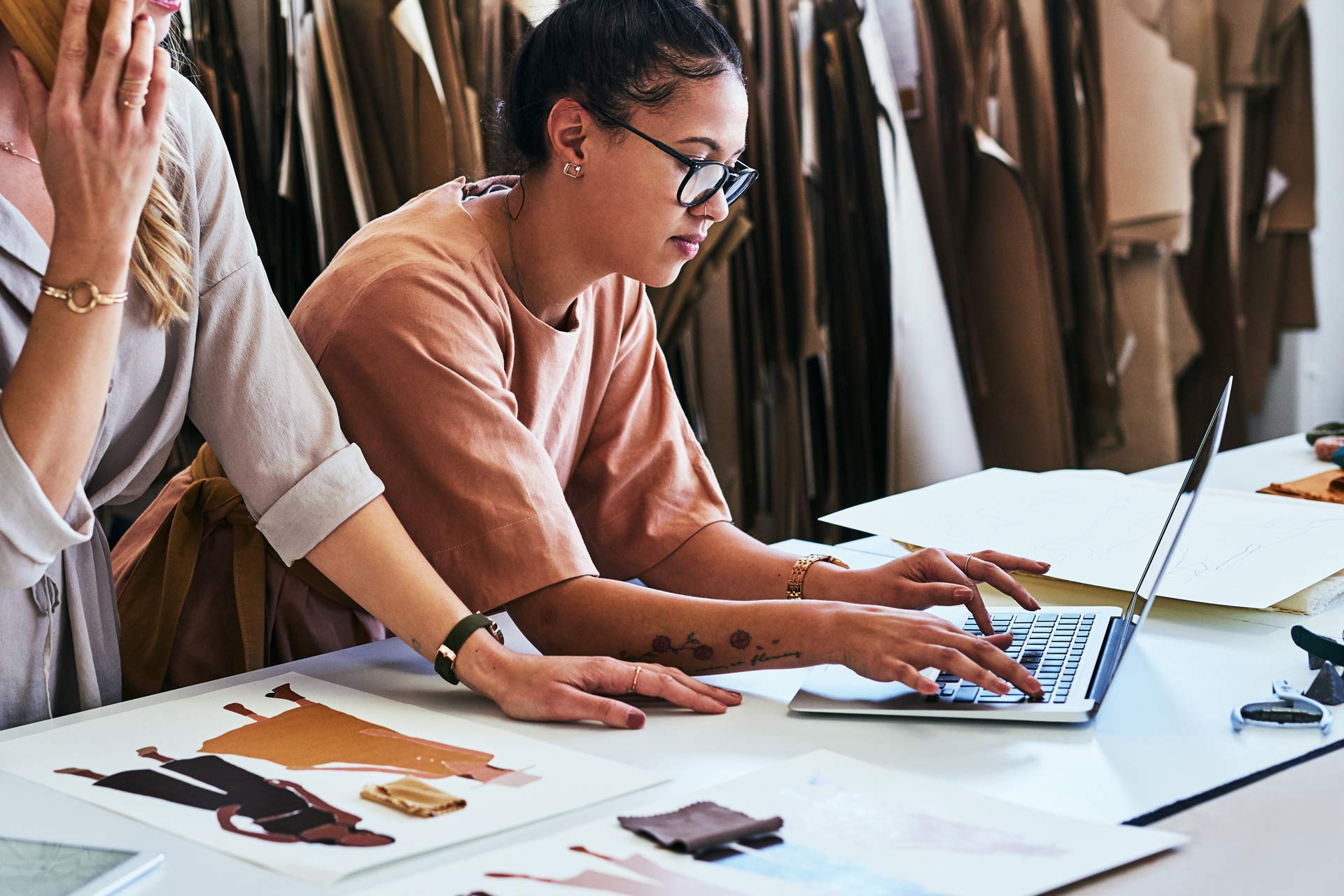

De stappen om een kledingmerk te starten
Stap 1. Bepaal je merk en je verkoopkanaal, voordat je ontwerpt
Voordat je een schets maakt, moet je twee dingen weten: voor wie je het maakt en hoe je gaat verkopen. Die tweede vraag bepaalt je fabrikant, je minimale afname en je kostprijs, en die keuzes kun je achteraf niet meer maken.
Verkoop je direct aan consumenten (D2C), via je eigen webshop of Instagram? Dan houd je meer marge per stuk en kun je met kleinere aantallen beginnen, maar draag je marketing en klantenservice zelf. Verkoop je aan winkels (B2B)? Dan is je marge per stuk lager, heb je grotere aantallen nodig en wacht je 30 tot 90 dagen op je geld, maar bereik je sneller meer mensen.
Veel starters beginnen D2C en voegen B2B toe zodra de collectie loopt. Dat is een logische volgorde, zolang je prijzen en productie daar vanaf het begin op zijn ingericht.
Stap 2. Doe marktonderzoek dat je idee op de proef stelt
De meeste starters zoeken bevestiging. Goed marktonderzoek zoekt het tegendeel: waarom zou dit niet werken, wie doet dit al, en wat zeggen mensen die je niet kent als je het ze voorlegt? Pas als je die antwoorden hebt, weet je of je idee meer is dan een wens.
Veel starters beginnen D2C en voegen B2B toe zodra de collectie loopt. Dat is een logische volgorde, zolang je prijzen en productie daar vanaf het begin op zijn ingericht.
Stap 3. Ontwikkel je capsulecollectie
Een capsulecollectie bestaat uit 4 tot 8 styles die samen een geheel vormen, bijvoorbeeld een broek, twee tops, een jas en een accessoire. Klein genoeg om te betalen en te produceren, groot genoeg om een merk neer te zetten.
Ontwerpen voor productie is iets anders dan schetsen voor een moodboard. Een ontwerp dat klaar is voor productie legt pasvorm, naden, zomen, labelplaatsing en kleur per materiaal vast. Kun je dat zelf niet, dan is dit het moment voor professioneel modeontwerp. Lees meer over fashion design op maat.
Stap 4. Laat per style een tech pack maken
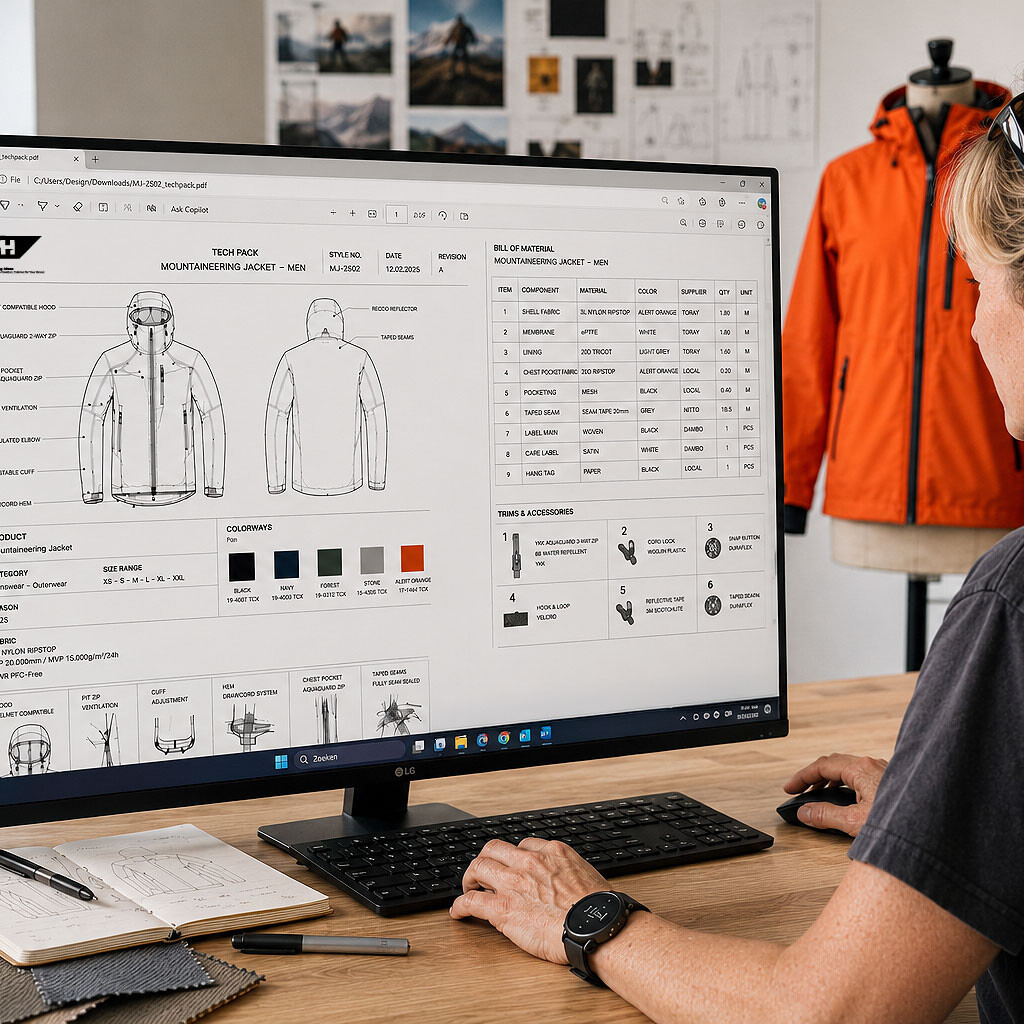
Een tech pack is het technische document dat je naar een fabrikant stuurt: technische tekeningen, maattabellen, stof- en kleurspecificaties, naad- en afwerkingsinstructies, labelplaatsing en kwaliteitseisen. Zonder tech pack vult de fabrikant de details zelf in, en dat levert bijna altijd samples op die niet kloppen.
Reken met één tech pack per style. Een capsule van vijf styles betekent vijf tech packs. Wij maken ze op vier niveaus, afhankelijk van hoe complex het kledingstuk is:
Quick Scan: bestaand tech pack laten controleren, binnen 48 uur
€ 175
Tech Pack Basis: t-shirts, hoodies, joggers
€ 375
Tech Pack Technisch: broeken, blouses, jurken
€ 600
Tech Pack Geavanceerd: jassen, sportkleding, technische kleding
€ 900
Prijzen per style, exclusief btw.
Stap 5. Kies een fabrikant en vraag offertes aan
Portugal, Turkije, Polen, China: elk land heeft andere sterke punten, minimale afnames, levertijden en kwaliteitsniveaus. Welke past, hangt af van je product, je budget, je planning en je eisen op het gebied van duurzaamheid.
Wat altijd geldt: vraag minstens drie offertes aan, controleer referenties en werk niet zonder contract. Een goed tech pack is daarbij je sterkste middel, omdat fabrikanten dan allemaal hetzelfde product prijzen en je de offertes echt kunt vergelijken.
Stap 6. Bestel samples en beoordeel ze systematisch
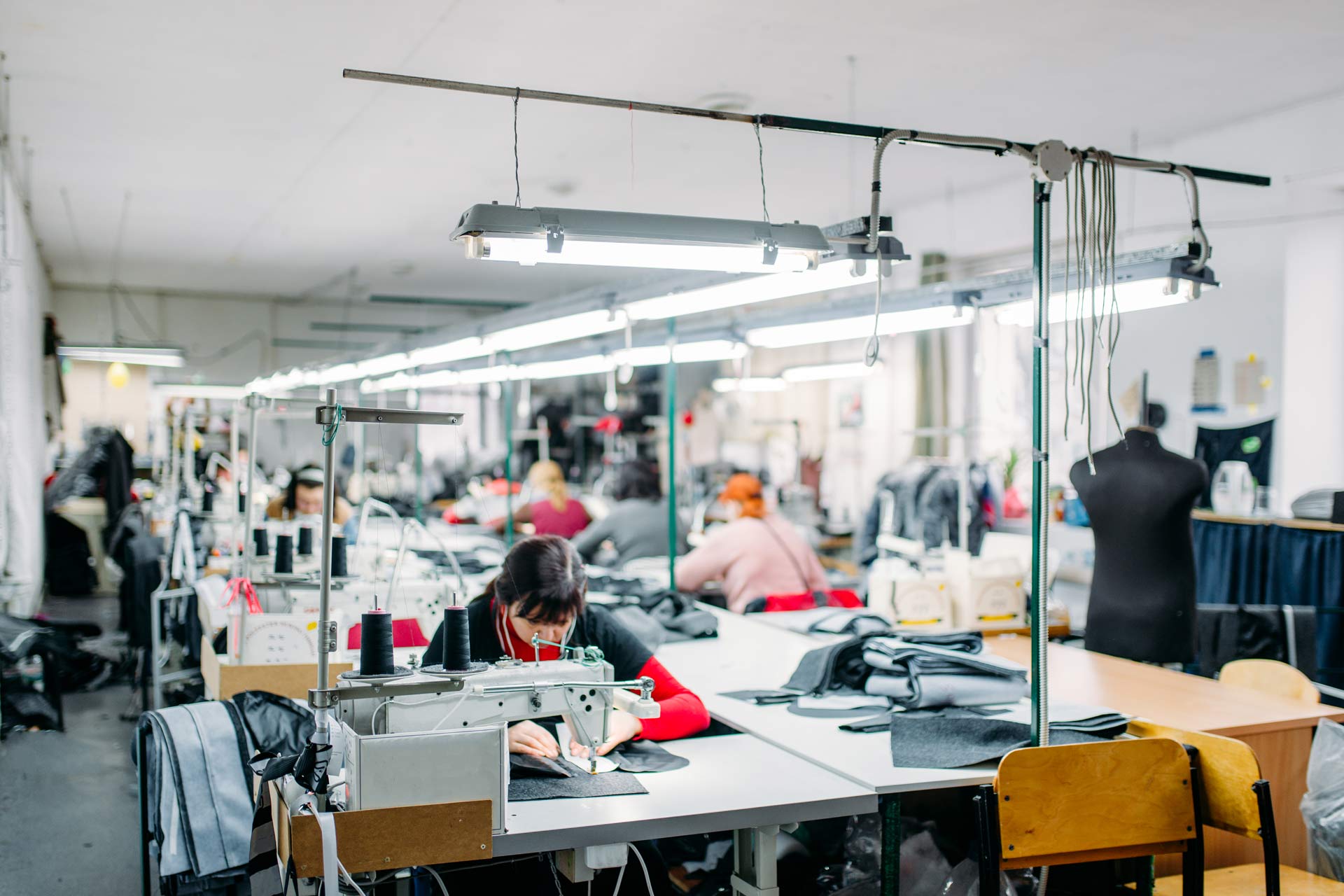
Een sample beoordelen is vakwerk. Kloppen de maten, is de afwerking goed, komt de kleur overeen met je Pantone-code, houdt de constructie het in gebruik? Leg per sample je feedback vast en houd bij wat er per ronde verandert. Reken op 2 tot 4 maanden voor de hele samplefase, inclusief correctierondes.
Stap 7. Plan je lancering
In stap 1 heb je gekozen hoe je verkoopt. Nu maak je het concreet. Bij D2C betekent dat je webshop, je fotografie en je eerste campagne. Bij B2B betekent het je prijslijst voor winkels, je lookbook en de beurzen of agenten waarmee je winkels bereikt. Veel merken doen eerst het een en daarna het ander, maar je productie en prijzen moeten beide routes vanaf het begin toelaten.
Begeleiding tijdens het hele traject
Fashion Path is ons begeleidingstraject voor starters en groeiende merken. Het is niet bedoeld voor als het misgaat, het loopt mee met alle stappen hierboven, van merkstrategie tot productie. Of een starter vastloopt na de eerste sample of gewoon lanceert, hangt zelden af van talent of budget. Het hangt af van structuur en kennis van hoe de industrie werkt.
Je kunt op drie manieren instappen. Met een merkstrategie sessie leg je positionering, doelgroep en verkoopkanaal vast. Met StartUp Boost gaan we van idee naar een collectie die klaar is voor productie, inclusief drie tech packs. En met ScaleUp Brands helpen we bestaande merken met productiestrategie, sourcing en groei. Bekijk alle Fashion Path trajecten.
Waar het in de praktijk misgaat
We zien dezelfde fouten steeds terugkomen. Niet omdat starters slordig zijn, maar omdat niemand het ze van tevoren vertelde.
Eén tech pack begroot, vijf nodig.
Een capsule van vijf styles heeft vijf tech packs nodig. Wie dat niet meerekent, raakt halverwege door het budget heen.
Produceren zonder tech pack.
"De fabrikant snapt het wel." Dat doet hij niet. Een fabriek in Portugal of Turkije maakt wat er op papier staat. Ontbreekt er iets, dan kiest de fabriek zelf, en jij betaalt het verschil.
Het ontwerp overgeslagen.
Starters gaan van idee direct naar tech pack terwijl hun ontwerp nog niet klaar is voor productie. Een goed tech pack begint bij een uitgewerkt ontwerp, niet bij een moodboard.
Het verkoopkanaal te laat gekozen.
Wie pas na de productie beslist of hij aan consumenten of aan winkels verkoopt, zit met de verkeerde inkoopprijs, de verkeerde aantallen of de verkeerde marge.
De minimale afname onderschat.
Starters rekenen op vijftig stuks, fabrikanten vragen er tweehonderd. Vijftig per style. Wie dat niet doorrekent, staat op het verkeerde moment voor een onmogelijke keuze.

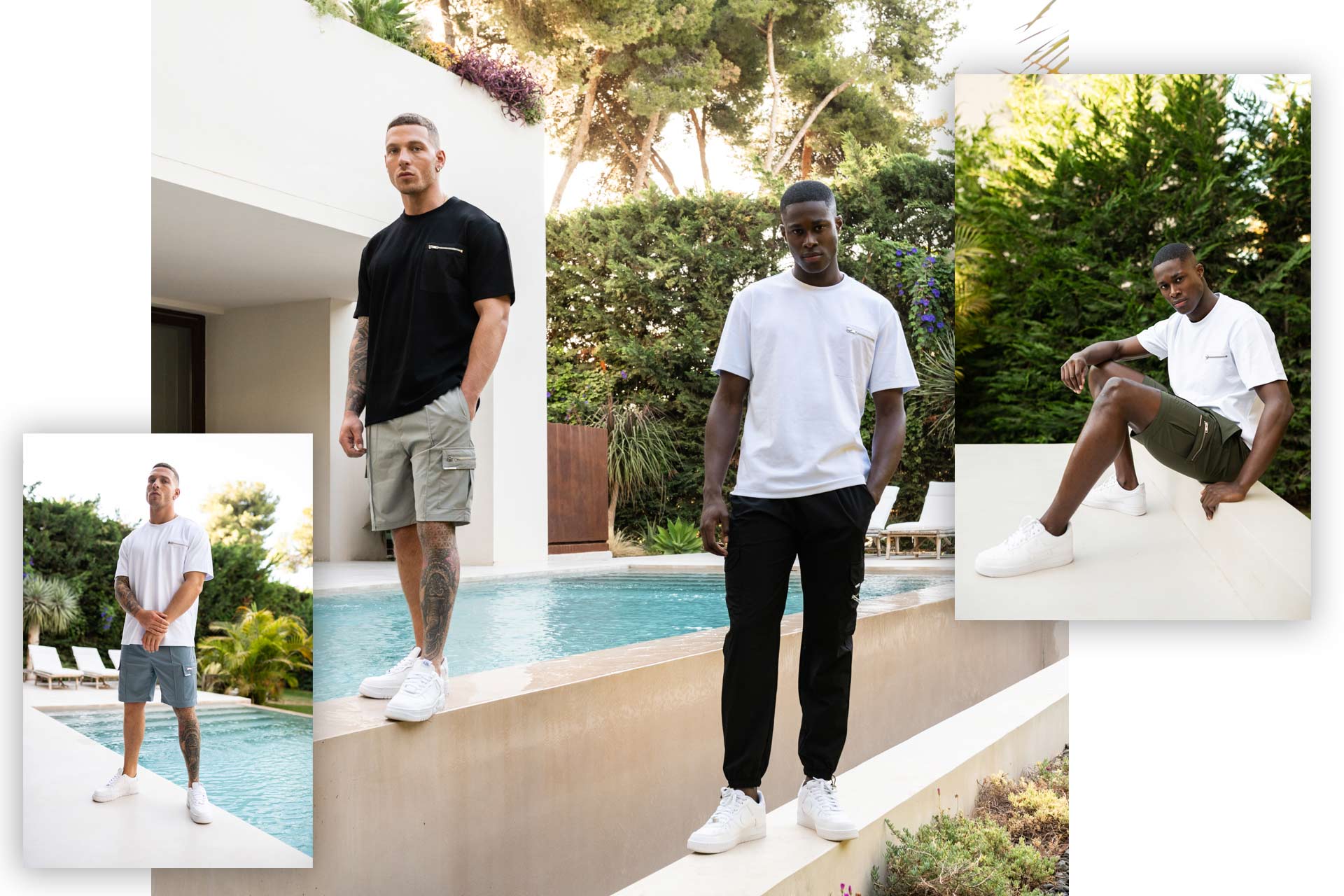
Hoeveel kost het om een kledingmerk te starten?
Voor een serieuze eerste lancering bestaat geen eerlijk antwoord onder de € 5.000. Hieronder een indicatie voor een capsulecollectie van vier styles, wat we als realistisch minimum zien.
Merkidentiteit en design (logo, huisstijl, basis)
€ 800 tot € 2.500
Modeontwerp (4 styles, klaar voor productie)
op offerte
Tech packs (4 × Basis à € 375)
€ 1500
Sampling (per style, meerdere rondes)
€ 850 tot € 2.000
Eerste productieronde (afhankelijk van minimale afname)
€ 3000 tot € 10.000
Webshop of D2C-opzet
€ 1250 tot € 3500
Totaal indicatief, 4 styles
€ 7000 tot € 18.000
Bedragen exclusief btw. Modeontwerp op offerte, afhankelijk van het aantal styles en de complexiteit. Tech packs gerekend op Basis-niveau; bij Technisch (€ 600) of Geavanceerd (€ 900) valt het hoger uit.
Wie bespaart op ontwerp of tech packs, betaalt dat terug in samples die niet kloppen en fabrikanten die zelf gaan invullen. Dat is duurder dan de besparing.
Wil je weten waar jij nu staat?
Plan een gratis kennismakingsgesprek. Geen verkooppraatje, maar een eerlijke inschatting van je situatie, welke stap nu logisch is en of Fashion Path bij je past.
Veelgestelde vragen over een kledingmerk starten
Eén per style. Een capsule van vier styles heeft vier tech packs nodig. De prijs hangt af van het kledingstuk: Basis (t-shirt, hoodie, jogger) € 375, Technisch (broek, blouse, jurk) € 600, Geavanceerd (jas, sportkleding, technische kleding) € 900, alle exclusief btw. Heb je al een tech pack maar twijfel je of het klopt? Een Quick Scan (€ 175, binnen 48 uur) vertelt je wat er ontbreekt.
Een kleine, samenhangende set van 4 tot 8 styles. Klein genoeg om te betalen en te produceren, groot genoeg om een merk neer te zetten. Wie direct een grote collectie lanceert, verdeelt zijn budget over te veel styles. Een capsule dwingt tot keuzes en laat zien of er vraag is voordat je opschaalt.
Bij D2C verkoop je zelf aan consumenten, via je webshop, Instagram of pop-ups. Meer marge per stuk, kleinere aantallen, meer controle. Bij B2B verkoop je aan winkels en platforms. Minder marge per stuk, grotere aantallen en betaaltermijnen van 30 tot 90 dagen. Veel merken beginnen D2C en voegen later B2B toe, maar je productie en prijzen moeten die keuze vanaf het begin ondersteunen.
Alleen als je ontwerp nog niet klaar is voor productie. Heb je al technische schetsen met stof, kleur en constructie? Dan kun je direct door naar het tech pack. Heb je alleen een moodboard of ruwe ideeën? Dan is modeontwerp de eerste stap. Wij doen beide, van eerste schets tot tech pack.
Voor een capsule van vier styles reken je op € 7.000 tot € 18.000 voor merkidentiteit, ontwerp, tech packs, sampling, een eerste productieronde en een eenvoudige webshop, exclusief btw. B2B vraagt grotere aantallen en valt dus hoger uit. Goedkoper kan, maar besparen op ontwerp of tech packs betaal je terug in samples die opnieuw moeten.
Ja, als je de juiste begeleiding hebt. De technische kant (tech packs, contact met fabrikanten, sampling) kun je leren of uitbesteden. Wat je zelf meebrengt: een helder idee voor je merk, budget om een fout op te vangen en de bereidheid om gestructureerd te werken.